
This colorful sheet-pan salmon dinner brings together tender salmon, roasted baby potatoes, crisp-tender green beans, cherry tomatoes, olives, artichoke hearts, and hard-boiled eggs with a bright lemon-Dijon dressing. It is a satisfying meal for busy evenings, with most of the cooking handled on one pan and only a few minutes of hands-on preparation.
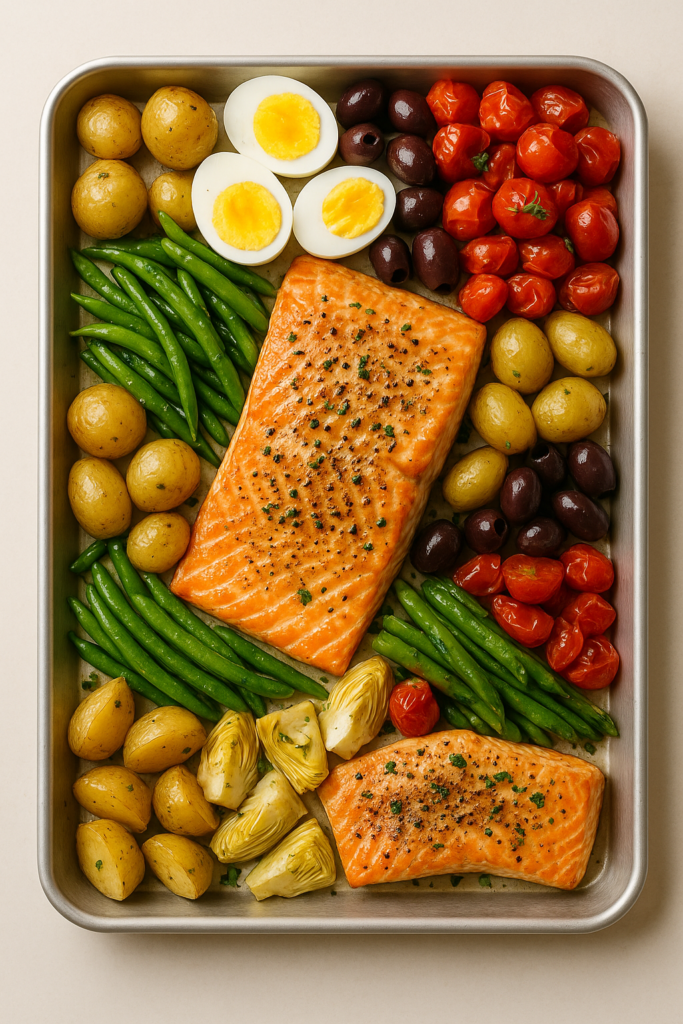
Why You’ll Love This Recipe
- Most of the meal cooks on one sheet pan for easier preparation and cleanup.
- Salmon, potatoes, green beans, tomatoes, olives, eggs, and artichokes provide different flavors and textures in every serving.
- The lemon-Dijon dressing adds a bright finish without a heavy sauce.
- The finished tray can be served warm for dinner or at room temperature for a relaxed lunch.
Recipe at a Glance
Prep Time: 15 minutes | Cook Time: 30 minutes | Total Time: 45 minutes
Servings: 4
Ingredients
- 4 salmon fillets (about 5 to 6 ounces each)
- 1 pound baby potatoes, halved
- 8 ounces green beans, trimmed
- 1 cup cherry tomatoes
- 1 cup quartered artichoke hearts, drained
- 1/2 cup pitted Kalamata or Niçoise olives
- 4 hard-boiled eggs, peeled and halved
- 3 tablespoons olive oil, divided
- 1/2 teaspoon kosher salt, divided, plus more to taste
- 1/4 teaspoon black pepper, divided, plus more to taste
- 1 tablespoon Dijon mustard
- Juice of 1/2 lemon
- Optional: 1 tablespoon chopped fresh parsley for serving
Directions
- Preheat the oven to 425°F. Line a large rimmed sheet pan with parchment paper or lightly coat it with oil.
- Place the potatoes cut-side down on the pan. Toss them with 1 tablespoon olive oil and approximately half of the salt and pepper. Roast for 15 minutes.
- Remove the pan from the oven. Add the green beans, cherry tomatoes, and artichoke hearts. Drizzle with 1 tablespoon olive oil and season with the remaining salt and pepper. Toss gently, then make space for the salmon and place the fillets on the pan, skin-side down if they have skin.
- Return the pan to the oven and roast for 10 to 12 minutes, until the vegetables are crisp-tender and the thickest part of each salmon fillet reaches 145°F.
- While the salmon finishes, whisk together the Dijon mustard, lemon juice, and remaining 1 tablespoon olive oil.
- After roasting, add the olives and hard-boiled egg halves to the tray. Drizzle with the lemon-Dijon dressing, garnish with parsley if desired, and serve.
Helpful Recipe Tips
- Cut the baby potatoes into similarly sized pieces so they finish cooking at approximately the same time.
- Use salmon fillets of similar thickness. A very thick fillet may require a few additional minutes in the oven.
- Pat the salmon dry before seasoning so it roasts instead of steaming.
- If the potatoes are not nearly fork-tender after the first 15 minutes, roast them for another 5 minutes before adding the salmon.
- Add the olives and hard-boiled eggs after roasting so they retain their texture and appearance.
Variations and Substitutions
- Replace the green beans with asparagus or small broccoli florets, adding them to the pan at the same stage as the salmon.
- Use baby gold potatoes, baby red potatoes, or fingerling potatoes; cut any larger pieces so they cook evenly.
- Replace the artichoke hearts with sliced roasted red peppers, or omit them if preferred.
- Add 1 tablespoon drained capers to the lemon-Dijon dressing for an additional briny flavor.
- For an egg-free version, omit the hard-boiled eggs and add 1 cup rinsed and drained cannellini beans or chickpeas after roasting.
Serving Suggestions
This tray can be served as a complete meal because it already includes salmon, potatoes, vegetables, and eggs. For a larger gathering, pair it with mixed greens, crusty bread, or a simple fruit salad. Offer additional lemon wedges and dressing at the table so each person can adjust the flavor.
Make-Ahead Instructions
To reduce preparation time, trim the green beans, drain the artichoke hearts, hard-boil the eggs, and prepare the lemon-Dijon dressing in advance. Refrigerate each component separately until needed. For the best texture, roast the salmon and vegetables shortly before serving.
Storage and Reheating
Refrigerate leftovers within two hours in shallow, airtight containers and use them within three to four days. Store any extra dressing separately. Reheat the salmon, potatoes, and vegetables covered in a 300°F oven until the center reaches 165°F, then add the eggs and olives after reheating. Freezing the assembled tray is not recommended because the eggs and vegetables can lose their texture.
Frequently Asked Questions
- Can I use frozen salmon? Yes. Thaw the salmon completely in the refrigerator, pat it dry, and follow the recipe as written. Because fillet thickness varies, use the internal temperature rather than cooking time alone to determine doneness.
- What type of olives work best? Niçoise olives provide a traditional briny flavor, but pitted Kalamata olives or standard black olives also work well. Choose whichever variety is easiest to find and suits your preference.
- How do I know when the salmon is finished? Insert an instant-read thermometer into the thickest part of the salmon without touching the pan. The salmon is safely cooked at 145°F and should appear opaque and flake easily with a fork.
- Can this tray be served cold? Yes. Fully cook the salmon first, refrigerate the meal within two hours, and serve it chilled or at room temperature. Do not leave the tray unrefrigerated for more than two hours.
- Can I omit the hard-boiled eggs? Yes. Leave out the eggs or replace them with one cup of rinsed and drained chickpeas or cannellini beans for another filling option.